
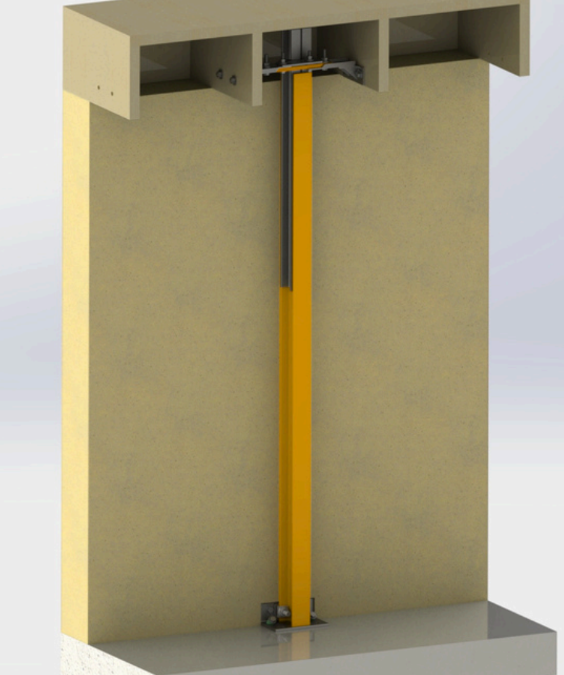
When it comes to protecting the structural integrity of your home or commercial building, foundation stability is critical. The Basement Vertical Beam (BVB) system is designed to reinforce and stabilize basement walls that are beginning to bow or weaken under pressure. With engineering-backed performance and practical installation guidelines, BVB offers a dependable solution for long-term structural support.
What Is the Basement Vertical Beam (BVB)?
The Basement Vertical Beam (BVB) is a structural reinforcement system installed against basement walls to counteract inward movement caused by soil pressure and moisture. The latest iteration of this product is BVB005 (currently under review/disputed), which builds upon earlier versions with refined design and performance improvements.
Each version of the BVB has unique characteristics. For a detailed comparison of design features and enhancements, refer to the BVB Versions Table, which outlines the evolution of the system.
Engineering and Structural Performance
Finite Element Analysis (FEA) was conducted on earlier versions of the BVB to evaluate maximum stress levels and stress distribution across the full assembly, including the base plate (based on the older base plate design). These simulations confirmed the system’s ability to effectively distribute loads and resist wall deflection.
It is important to note that:
Results from earlier FEA studies may differ slightly from the current BVB005 configuration.
Ongoing design refinements aim to further enhance structural performance and installation efficiency.
Installation Guidelines and Requirements
Proper installation is essential to ensure the effectiveness and longevity of the BVB system. Below are the key requirements:
Wall Condition
- The BVB is suitable for installation in concrete or CMU (Concrete Masonry Unit) walls.
- If the wall is bowing:
- It must not exceed 2 inches of inward displacement.
- If bowing is greater than 2 inches, the wall must first be professionally pushed back before installation.
Wall Height
- The system is designed for walls with a maximum height of 9 feet.
Beam Spacing
- The spacing between BVB units is determined based on engineering specifications outlined in the report tables.
- If the distance between a wall corner and the nearest BVB exceeds recommended limits:
- An additional BVB unit must be installed to maintain structural compliance.
Long-Term Durability and Maintenance
To maximize the lifespan and performance of the BVB system, ongoing maintenance is essential:
Protective Coating:
- The beam must be painted promptly after installation to prevent corrosion and rust.
Moisture Control:
- The surrounding structural system—including floor joists, foundation walls, and flooring—must be properly maintained to avoid:
- Excess moisture buildup
- Exposure to corrosive agents
Preventive Measures:
- Regular inspection, waterproofing, and timely repairs will significantly extend the durability of both the BVB and the overall foundation system.
Why Choose the BVB System?
The Basement Vertical Beam system offers several advantages:
- Engineered reinforcement for bowing walls
- Suitable for both residential and commercial applications
- Compatible with concrete and CMU foundations
- Backed by structural analysis and tested performance
- Scalable installation based on wall dimensions and conditions